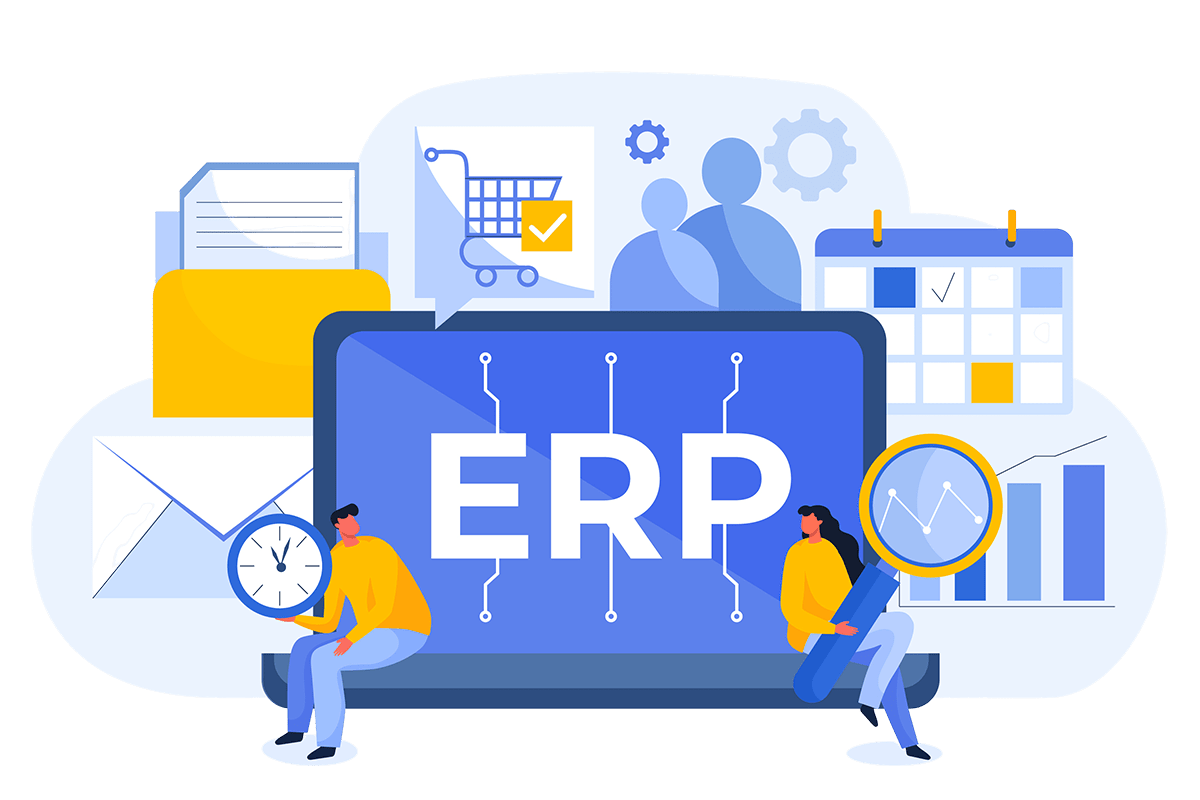
How ERP Centralizes Business Operations
In a fast-moving business world, efficiency is no longer optional — it is essential. Organizations must manage sales, finance, operations, inventory, HR, and customer service with precision. However, when each department uses separate tools, information becomes scattered, processes slow down, and decision-making becomes reactive instead of strategic. This is where an ERP (Enterprise Resource Planning) system becomes a game-changer.
ERP connects people, data, and processes under one unified platform, enabling businesses to operate smarter and faster.
The Role of ERP in Modern Businesses across departments
ERP is not just software — it is the digital backbone of a company. It helps centralize operations, automate repetitive tasks, and eliminate inefficiencies that slow growth.
Key impacts include:
• Real-time visibility across departments
• Reduced manual work through automation
• Faster decision-making with accurate insights
• Stronger collaboration between teams
• Consistent workflows that support growth
How ERP Enhances Everyday Operations
ERP reshapes daily business processes by creating a connected and coherent environment. Here’s how it creates value across key areas:
Sales & Customer Service
• Tracks leads, orders, and customer history
• Improves response time with real-time data
• Ensures accurate stock and pricing information
Finance & Accounting
• Automates billing, payments, and reporting
• Reduces human errors in financial entries
• Provides up-to-date cash flow and profit insights
Inventory & Supply Chain
• Real-time stock tracking
• Automated reordering and supplier coordination
• Avoids overstocking and stockouts
HR & Payroll
• Manages attendance, payroll, and employee data
• Simplifies recruitment and onboarding
• Ensures compliance with labor regulations
Manufacturing & Production
• Tracks production cycles end-to-end
• Reduces downtime through planned scheduling
• Ensures consistent product quality
Strategic Benefits of Adopting ERP
Beyond everyday operations, ERP creates long-term strategic advantages:
• Improved data integrity across the organization
• Future-ready infrastructure that supports growth
• Greater precision in financial and operational planning
• Better customer satisfaction due to improved service control
• Streamlined digital transformation across all units
Why ERP Is Not Just for Large Enterprises
Many believe ERP is meant only for large corporations, but today’s cloud-based and modular ERP systems are designed for businesses of every size.
Small and mid-sized businesses benefit through:
• Lower operational costs
• Faster processing
• Easy scaling
• Better control over everyday operations
Conclusion: ERP as a Driver of Sustainable Growth
ERP gives businesses the foundation they need to operate efficiently, respond faster, and plan smarter. By centralizing processes, improving accuracy, and enabling real-time insights, ERP helps organizations stay competitive and resilient.
Companies that adopt ERP are not just improving systems — they are building a smarter future.
ERP connects people, data, and processes under one unified platform, enabling businesses to operate smarter and faster.
The Role of ERP in Modern Businesses across departments
ERP is not just software — it is the digital backbone of a company. It helps centralize operations, automate repetitive tasks, and eliminate inefficiencies that slow growth.
Key impacts include:
• Real-time visibility across departments
• Reduced manual work through automation
• Faster decision-making with accurate insights
• Stronger collaboration between teams
• Consistent workflows that support growth
How ERP Enhances Everyday Operations
ERP reshapes daily business processes by creating a connected and coherent environment. Here’s how it creates value across key areas:
Sales & Customer Service
• Tracks leads, orders, and customer history
• Improves response time with real-time data
• Ensures accurate stock and pricing information
Finance & Accounting
• Automates billing, payments, and reporting
• Reduces human errors in financial entries
• Provides up-to-date cash flow and profit insights
Inventory & Supply Chain
• Real-time stock tracking
• Automated reordering and supplier coordination
• Avoids overstocking and stockouts
HR & Payroll
• Manages attendance, payroll, and employee data
• Simplifies recruitment and onboarding
• Ensures compliance with labor regulations
Manufacturing & Production
• Tracks production cycles end-to-end
• Reduces downtime through planned scheduling
• Ensures consistent product quality
Strategic Benefits of Adopting ERP
Beyond everyday operations, ERP creates long-term strategic advantages:
• Improved data integrity across the organization
• Future-ready infrastructure that supports growth
• Greater precision in financial and operational planning
• Better customer satisfaction due to improved service control
• Streamlined digital transformation across all units
Why ERP Is Not Just for Large Enterprises
Many believe ERP is meant only for large corporations, but today’s cloud-based and modular ERP systems are designed for businesses of every size.
Small and mid-sized businesses benefit through:
• Lower operational costs
• Faster processing
• Easy scaling
• Better control over everyday operations
Conclusion: ERP as a Driver of Sustainable Growth
ERP gives businesses the foundation they need to operate efficiently, respond faster, and plan smarter. By centralizing processes, improving accuracy, and enabling real-time insights, ERP helps organizations stay competitive and resilient.
Companies that adopt ERP are not just improving systems — they are building a smarter future.